Appalachian Trail (Keys Gap to Potomac River)
Appalachian Trail Conservancy
799 West Washington Street
Harpers Ferry, WV 25425
(304) 535-6331
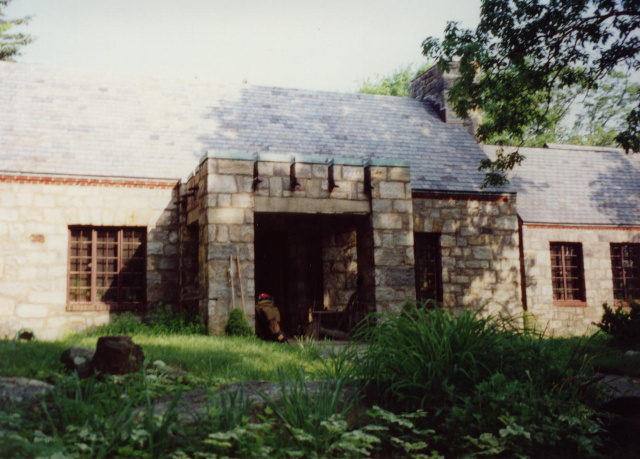
West Virginia officially has only 2.3 miles of the Appalachian Trail and part of it runs right past the Appalachian Trail Conference (ATC) headquarters and visitor center at Harpers Ferry. However, nearly twenty-three miles of the Trail hug the Virginia/West Virginia border in both Northern and Central Virginia. At Keys Gap, the Appalachian Trail follows a wooded ridge above the Shenandoah River and passes Jefferson Rock, an overlook with impressive views of the Potomac and Shenandoah rivers. It then climbs to a ridge that overlooks Harpers Ferry from the south via a blue blazed side trail leading to Loudoun Heights. This site was an important and strategic location during the Civil War and the Confederacy bombarded the town from these heights during a siege lasting from September 13-15, 1862.
In Harpers Ferry, the Appalachian Trail passes the ATC headquarters and continues along the river. Harpers Ferry has a long and dramatic history shaped by geography, industry, and conflict. Located at the confluence of the Potomac and Shenandoah rivers, it became strategically important early in American history. In 1761, Robert Harper established a ferry across the Potomac, giving the town its name. By 1796, the U.S. government selected Harpers Ferry for a federal armory and arsenal—one of only two in the country at the time—which transformed the town into a booming industrial center. The most famous event in its past occurred in October 1859, when abolitionist John Brown led a raid on the armory in an attempt to spark a slave uprising; although the raid failed, it helped accelerate the nation toward civil war. During the Civil War, Harpers Ferry changed hands multiple times due to its strategic railroads, bridges, and river crossings, and it saw significant action—including the 1862 surrender of the largest Union force of the war. Today, Harpers Ferry is preserved as a National Historical Park, with its historic buildings, battlefield sites, and dramatic scenery telling the story of early America, the fight over slavery, and the rebirth of the nation. There is a Harpers Ferry National Historical Park located here with interpretive exhibits that tell the detailed history of the area, including the destructive floods which have ravaged the community since the 1700’s. The Trail leaves the State of West Virginia via a footbridge over the Potomac River just past the historical park and joins briefly with the C&O Canal Towpath in the State of Maryland.
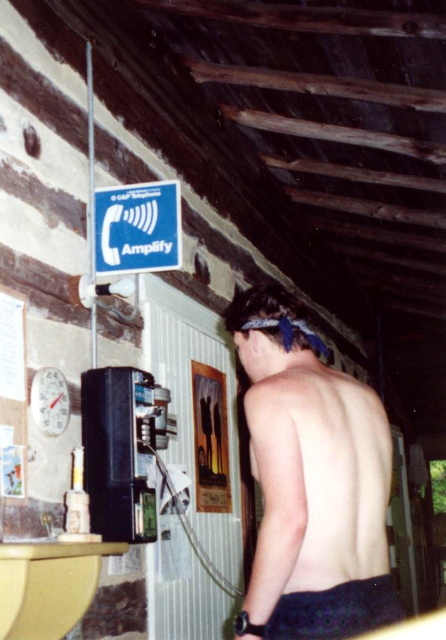
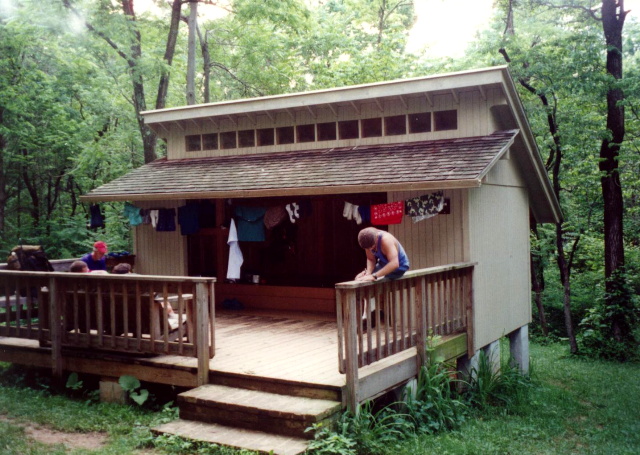
- click for more photos from backpacking trip on the A.T. in West Virignia: June 14, 1996
- click for a Daytimer report from this hike in northern Virginia: June 14, 1996 (password required)
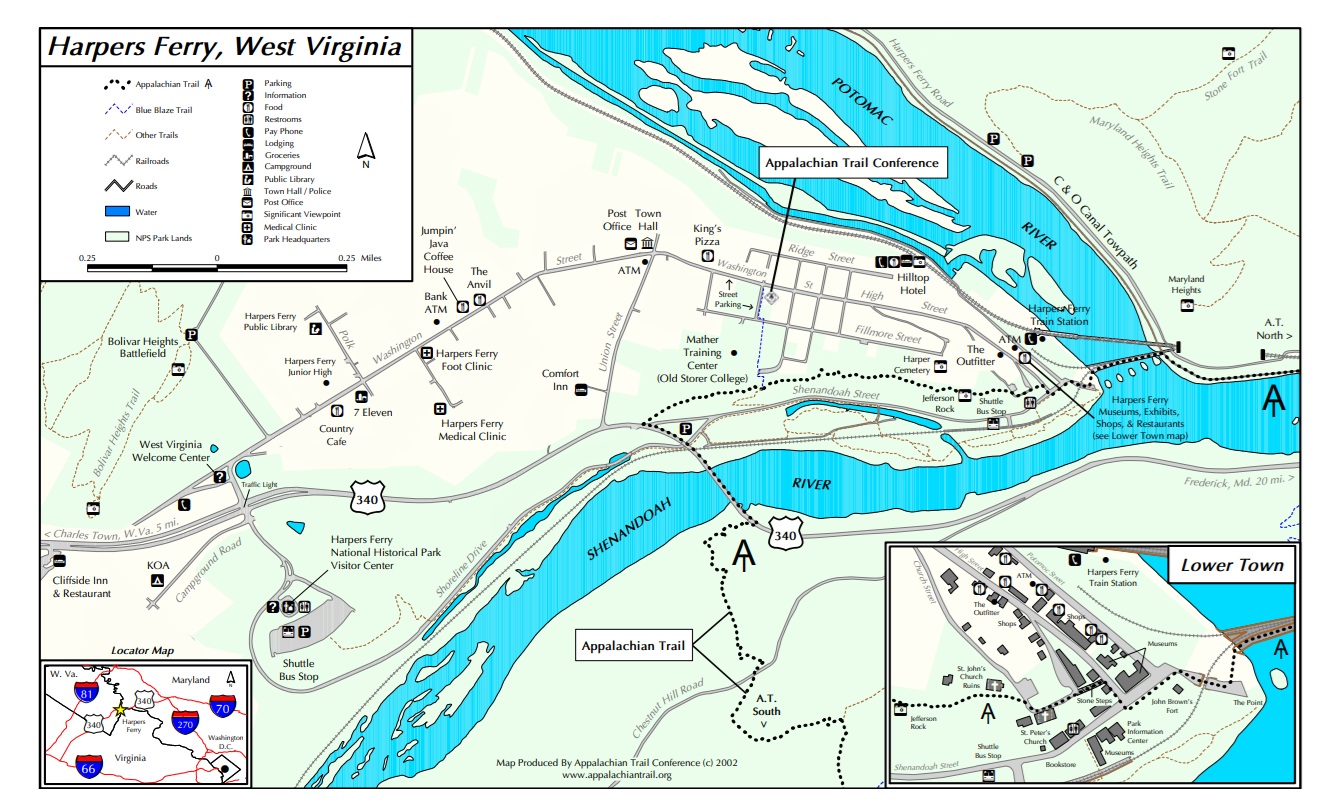
- click for a trail map of the A.T. in Harper’s Ferry, West Virginia
- click for a topo and profile map of the A.T. from Keys Gap to Harper’s Ferry (password required)
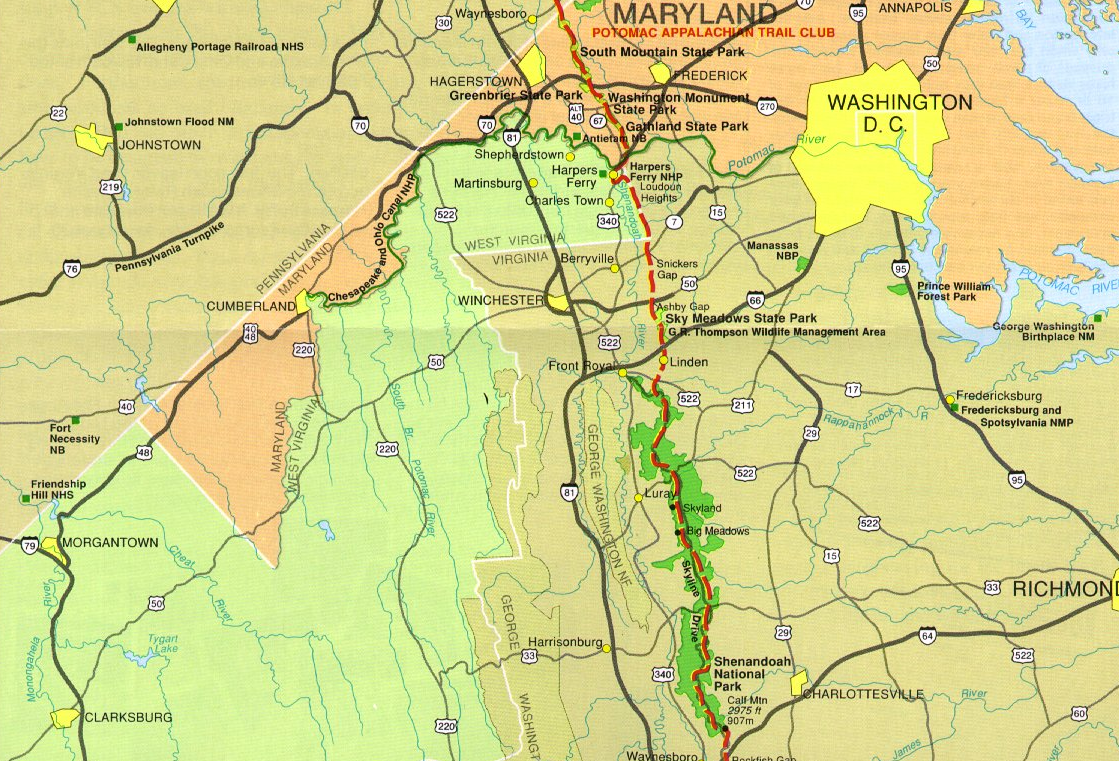
- click for a trail map from this section of the A.T. in northern Virginia and West Virginia
- click for a map of the entire Appalachian Trail
- click for a summary of the 2000+ mile Appalachian Trail
- click for recommended books, videos and games about the Appalachian Trail
- click for more hikes in the State of West Virginia